The Smart Business Owner's Guide to Commercial Security and Low Voltage Systems in the Puget Sound
Everything Seattle, Bellevue, Bothell, Everett, and Lynnwood business owners need to know about protecting their properties with modern low voltage technology.
Commercial Security Has Changed — Has Your Business Kept Up?
There was a time when securing a commercial building meant installing a deadbolt, mounting a basic alarm, and hoping for the best. Those days are long gone.
In 2026, business owners across the Puget Sound region are navigating a security landscape that looks nothing like it did even five years ago. While overall property crime rates in Washington State have actually declined — dropping 13.4% in 2024 according to WASPC's Crime in Washington report — specific threats continue to affect Puget Sound businesses. Organized retail theft, package theft from loading docks and delivery areas, and catalytic converter theft remain persistent concerns from Seattle to Everett. Improving headline numbers don't eliminate risk, and the technology available to combat these targeted threats has advanced dramatically — making it more accessible to mid-size and small businesses than ever before.
Whether you own a retail storefront in Bellevue, manage a warehouse in Everett, oversee a medical office in Bothell, or run a multi-tenant property in Lynnwood, this guide is for you. We're going to walk through the world of low voltage commercial security systems — what they are, how they work together, what they can do for your bottom line, and why the contractor you choose to install them matters more than you might think.
This isn't a sales pitch for the latest gadget. It's a practical, no-nonsense guide for business owners, property managers, and facility directors who want to make informed decisions about protecting their people, their assets, and their livelihoods.
1. What Are Low Voltage Systems? (And Why Every Commercial Building Needs Them)
If you've heard the term "low voltage" thrown around and weren't entirely sure what it meant, you're not alone. In the electrical industry, low voltage refers to Class 2 and Class 3 circuits — systems that operate at significantly reduced voltage and power levels compared to the standard 120V or 240V wiring that powers your lights, HVAC, and heavy equipment. Most commercial security and signaling systems fall under NEC Class 2, which is capped at 30 volts AC or 60 volts DC, making them inherently safer to install and maintain.
Low voltage systems are the nervous system of a modern commercial building. They carry signals and data rather than heavy electrical current, and they include nearly every security and communication technology your business relies on.
Here are the core categories that a commercial low voltage electrical contractor like System Solutions of Washington installs and services:
CCTV / Video Surveillance
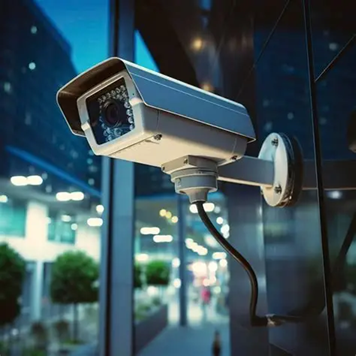
Today's commercial video surveillance goes far beyond grainy footage on a VHS tape. Modern IP camera systems deliver high-definition video, night vision, and wide-angle coverage. Recordings can be stored on-premise using a network video recorder (NVR) or in the cloud for off-site redundancy. Business owners in Seattle, Kenmore, and throughout Snohomish County can monitor their properties in real time from a smartphone, tablet, or desktop — from anywhere in the world.
Access Control
Access control systems replace traditional keys with smarter, more manageable solutions: key cards, fobs, mobile phone credentials, PIN pads, and even biometric readers. More importantly, they give you role-based permissions — meaning you can control exactly who enters which doors, at what times, and log every access event for audit purposes.
Motion Sensors and Intrusion Detection
Motion-activated sensors, glass-break detectors, and door/window contacts form the perimeter defense layer of any commercial security system. When triggered, these devices can activate alarms, send instant notifications, and trigger camera recordings — giving you rapid awareness of unauthorized entry.
Fire Alarm and Detection Systems
Commercial fire alarm systems are not optional — they're required by code in virtually every commercial building in Washington State. Modern systems include smoke detectors, heat detectors, pull stations, notification appliances (horns and strobes), and centralized monitoring panels. They can also integrate directly with your other building systems to trigger automatic door releases and HVAC shutdowns in an emergency.
Integration With Building Management Systems
The real power of low voltage technology emerges when these individual systems work together as a unified platform. An access control event can trigger a camera to start recording. A fire alarm can unlock exit doors automatically. Motion detection after hours can alert a remote monitoring center and pull up live video feeds. Rather than operating as isolated components, modern systems create a seamless, intelligent security ecosystem.
2. Five Ways Modern Security Systems Protect Puget Sound Businesses
Understanding what these systems are is one thing. Understanding how they actively protect your business — and your bottom line — is another. Here are five concrete ways modern low voltage security systems are making a difference for commercial properties across the Puget Sound region.
1. AI-Powered Video Analytics Detect Threats in Real Time
Artificial intelligence in commercial video surveillance is no longer experimental — in 2026, it's mainstream. AI-powered analytics can do things that a human security guard watching a bank of monitors simply cannot:
- Identify suspicious behavior patterns — such as loitering near restricted areas, vehicles circling a parking lot, or individuals testing door handles after hours
- Detect unauthorized access — recognizing when someone follows an authorized employee through a secured door ("tailgating")
- Analyze footage across multiple camera feeds simultaneously — monitoring dozens or even hundreds of cameras at once, far beyond what a single human operator could track
- Reduce false alarms — distinguishing between a raccoon crossing your loading dock and an actual intruder
- Paired with modern camera hardware — including thermal imaging, infrared night vision, and wide dynamic range sensors — AI analytics deliver reliable detection around the clock, regardless of lighting conditions.
For businesses in high-traffic areas like downtown Seattle or Bellevue's commercial corridors, this kind of intelligent monitoring is a significant upgrade over passive recording.
2. Remote Monitoring and Virtual Guarding Reduce Costs
Hiring a full-time, on-site security guard is expensive — typically thousands of dollars per month, often $2,000 to $12,000 or more depending on coverage level — with unarmed guards starting around $2,000 per month and armed 24/7 coverage reaching $12,000 or higher. Remote monitoring and virtual guarding offer a compelling alternative. When cameras or sensors detect activity, a trained remote operator can view the live feed, assess the situation, and issue verbal warnings through on-site speakers. Industry data consistently shows that verbal intervention from a remote operator deters intrusions in the vast majority of cases, often preventing incidents before they escalate.
This approach is especially valuable for businesses that can't justify full-time guards — think storage facilities in Lynnwood, auto dealerships in Everett, or construction sites in Snohomish County where equipment theft is a constant concern.
3. Cloud-Based Access Control Provides Visibility From Anywhere
If you manage multiple locations — say a dental practice in Bothell and a second office in Kenmore — cloud-based access control lets you manage them from a single dashboard. You can issue or revoke credentials instantly, view access logs in real time, set schedules for cleaning crews and vendors, and receive alerts when something unusual happens. No more driving across town to re-key a lock when an employee leaves.
4. Integrated Fire Detection Ensures Code Compliance and Faster Response
Washington State and local fire codes require commercial buildings to maintain functional fire alarm systems, with regular inspections and testing. But compliance is the floor, not the ceiling. Modern fire detection systems integrated with your overall security platform can:
- Automatically notify the fire department and building management simultaneously
- Trigger emergency lighting and unlock exit doors for safe evacuation
- Provide the fire department with real-time information about the alarm's location within the building
- Integrate with HVAC systems to prevent smoke from spreading through ductwork
Faster response times save lives, reduce property damage, and protect your business from devastating interruptions.
5. Unified Systems Lower Insurance Premiums and Reduce Loss
Here's a benefit that often surprises business owners: a properly installed, professionally monitored security system can directly impact your operating costs. Many commercial insurance carriers offer premium discounts for properties with verified surveillance, access control, and fire alarm systems. Beyond insurance savings, the reduction in theft, vandalism, and inventory loss translates into real money back in your pocket.
Pro Tip
When requesting insurance quotes, ask your carrier specifically about discounts for UL-listed fire alarm systems and 24/7 monitored video surveillance. The savings can be substantial — often enough to offset a meaningful portion of your system's monthly monitoring cost.
3. Why Your Electrical Contractor Should Install Your Security System
This is where many business owners make a costly mistake. They hire a dedicated security vendor to install cameras and access control — and then discover that the underlying wiring, power supply, and network infrastructure aren't up to the task. The system drops offline during a power surge. Cameras lose connectivity because the cabling wasn't rated for the distance. The fire alarm panel can't communicate with the building's emergency lighting because they were installed by two different companies who never coordinated.
There's a better way. Here's why choosing a licensed electrical contractor like System Solutions of Washington to handle your security installation makes a critical difference:
Proper Wiring and Power Infrastructure Is the Backbone
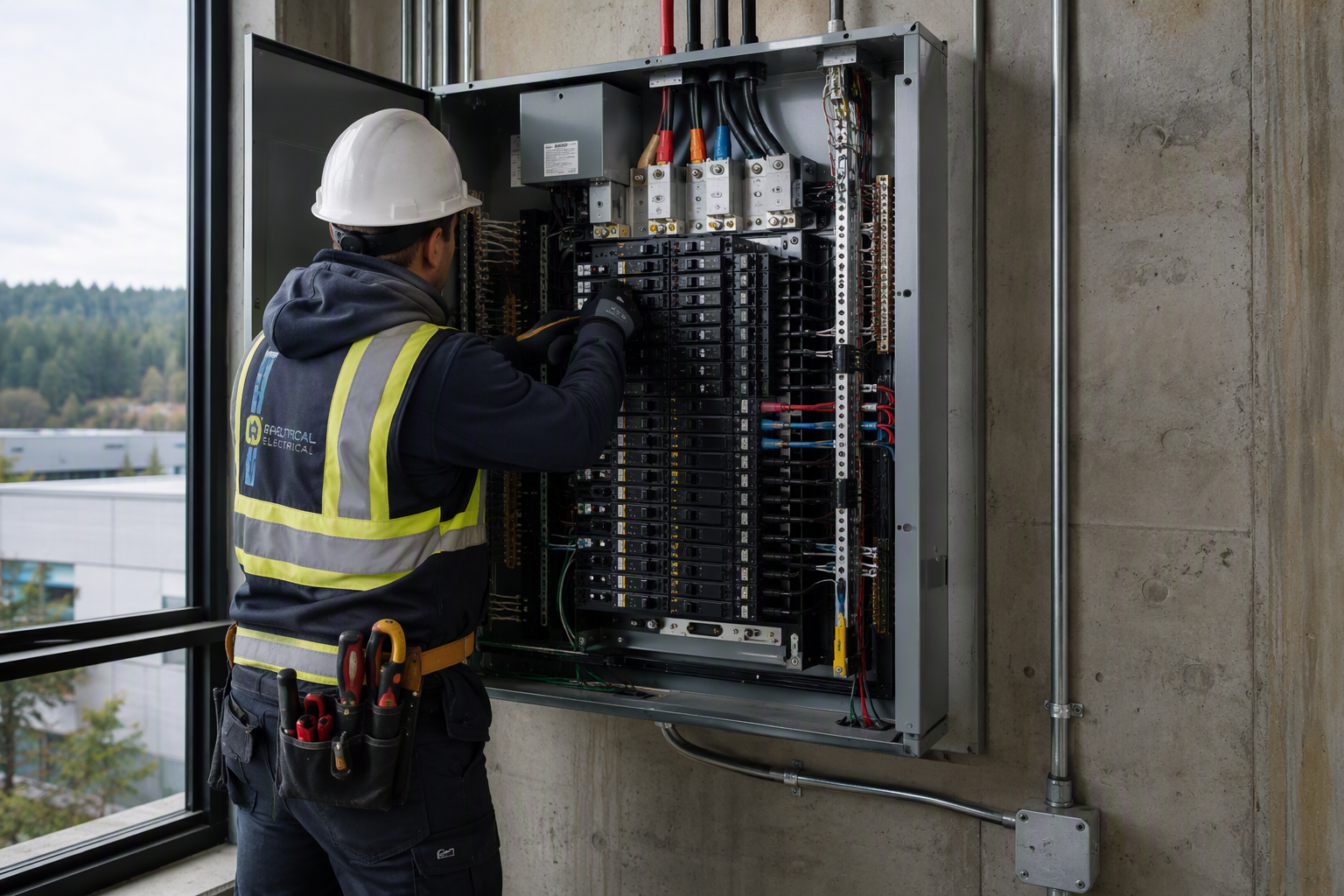
Every camera, sensor, card reader, and fire alarm device needs reliable power and data connectivity. A licensed electrician doesn't just mount devices on walls — they design and install the entire infrastructure that makes those devices work reliably, day in and day out. That includes structured cabling, conduit runs, dedicated circuits, and power-over-ethernet (PoE) switching.
Code Knowledge Protects You From Liability
The National Electrical Code (NEC) and Washington State Building Code set specific requirements for low voltage installations in commercial buildings — from wire types and conduit fill ratios to fire-stopping penetrations and equipment grounding. A licensed electrical contractor understands these codes and ensures your installation passes inspection the first time. A security-only vendor may not.
Integration With Your Building's Existing Electrical Systems
Your security system doesn't exist in isolation. It needs to integrate with your existing electrical panels, backup generators, emergency lighting, and potentially your building's automation systems. System Solutions of Washington has extensive experience tying security installations into the broader electrical infrastructure of a building — including generator systems that keep your security online during a power outage.
One Contractor for the Whole Building
Coordinating multiple vendors — one for electrical, one for security, one for fire alarms, one for data cabling — creates communication gaps, scheduling conflicts, and finger-pointing when something goes wrong. A full-service electrical contractor handles it all under one roof, with one point of accountability and one warranty.
Local Expertise and Long-Term Service
System Solutions of Washington is a family-owned company based right here in Lynnwood, WA, with over 150 years of combined experience across its team. They're not a national franchise that sends a different technician every time. They're your neighbors, serving King, Pierce, Whatcom, and Snohomish counties — and they'll be here when you need service, upgrades, or troubleshooting years down the road.
Fire alarm and detection systems must be professionally installed and integrated with your building's electrical infrastructure to meet Washington State code requirements.
4. What to Consider Before Upgrading Your Commercial Security
Ready to take the next step? Before you pick up the phone, take some time to think through these important considerations. Walking into a security assessment with a clear picture of your needs will help your contractor design a system that fits your building, your budget, and your operational requirements.
| Considerations | Key Questions to Ask |
|---|---|
| Assess your current security gaps | Where are your camera blind spots? Which entry points are unsecured or rely on traditional keys? Are your fire alarms up to date and recently inspected? |
| Plan for scalability | Can the system grow with your business? If you add a second location or expand your current facility, can the platform scale without a complete overhaul? |
| Evaluate network infrastructure | IP cameras and cloud-based access control require robust network cabling and sufficient bandwidth. Is your current network ready, or does it need an upgrade? |
| Budget for installation and monitoring | Understand the full cost picture — hardware, installation labor, monthly monitoring fees, and ongoing maintenance. A quality system is an investment, not an expense. |
| Check code requirements | Washington State and local jurisdictions (Seattle, Bellevue, Everett, etc.) have specific fire alarm, access control, and surveillance requirements. Make sure your system meets or exceeds them. |
| Ask about integration | Can the new system integrate with your existing building management, HVAC, emergency lighting, and generator systems? A unified approach saves time, money, and headaches. |
Important for Puget Sound Business Owners
Washington State requires commercial fire alarm systems to be inspected and tested annually. If your building's fire alarm system hasn't been inspected recently, upgrading your security is a good time to bring everything into compliance under one contractor.
5. Protect Your Business With a Team That Knows Puget Sound
Commercial security isn't a one-size-fits-all proposition. The needs of a retail complex in Bellevue are different from those of a manufacturing facility in Everett or a professional office building in Bothell. What matters is having a partner who understands the technology, the codes, the local landscape, and — most importantly — your business.
System Solutions of Washington is a family-owned commercial and residential electrical contractor based in Lynnwood, WA, proudly serving King, Pierce, Whatcom, and Snohomish counties. From CCTV installation in Seattle to access control systems in Bothell and commercial fire alarm systems throughout the Puget Sound, their team brings the licensed electrical expertise and hands-on experience that standalone security vendors simply can't match.
Whether you need a single camera installation, a complete access control overhaul, a fire alarm upgrade, or a full building security system designed from the ground up — they're here to help.
Schedule Your Free Commercial Security Assessment
Let System Solutions of Washington evaluate your property, identify vulnerabilities, and design a low voltage security system tailored to your business.
Call: (425) 249-2076
Email: fredw@systemsolutionswa.com
Whether you need a single camera installation or a full building security overhaul, we're here to help.
Serving Seattle, Bellevue, Bothell, Kenmore, Everett, Lynnwood, and the entire Puget Sound region.