The Commercial Landlord's and GC's Guide to Electrical Preventive Maintenance in the Puget Sound
Your electrical system won't tell you it's failing. It will just fail — at the worst possible time, in front of the wrong people.
A breaker trips during a tenant's busiest shift. An infrared scan during a building sale reveals a hot connection that's been quietly cooking for two years. A prospective tenant's electrician walks a space and flags a panel that hasn't been serviced since the Clinton administration. A GC's project gets delayed because the existing building service can't support the new tenant's load — and nobody checked before the lease was signed.
These aren't hypothetical scenarios. They're the kinds of situations that commercial property owners and construction company owners in the Puget Sound region deal with regularly — and in almost every case, they were preventable.
A structured electrical preventive maintenance program is one of the highest-return investments a commercial landlord can make. It protects asset value, reduces liability exposure, satisfies insurance and lender requirements, and prevents the kind of mid-tenancy electrical failures that damage tenant relationships and trigger expensive emergency repairs.
This guide is written for two audiences: commercial property owners and landlords who want to protect their buildings and their tenants, and construction company owners and GCs who need to understand the electrical condition of existing buildings before they bid, build, or hand over keys.
Why Electrical Maintenance Is a Business Decision, Not Just a Safety Checkbox
Most commercial landlords think about electrical systems reactively — when something breaks, when a tenant complains, or when an inspector flags a violation. That approach is expensive.
Here's why proactive electrical maintenance makes financial sense:
Insurance. Commercial property insurers increasingly require documented electrical maintenance records as a condition of coverage — particularly for older buildings. The National Fire Protection Association (NFPA) 70B standard, Standard for Electrical Equipment Maintenance, provides the framework that insurers and risk managers reference when evaluating a building's electrical maintenance posture. A building with no maintenance records is a building with undocumented risk.
Lender and investor scrutiny. When a commercial property is refinanced, sold, or brought to market, lenders and buyers conduct physical due diligence that includes electrical system condition. In Washington State, a standard CRE due diligence checklist includes utility service adequacy review, existing as-built drawings, and a property condition assessment that covers electrical systems. A building with deferred electrical maintenance — aging switchgear, unlabeled panels, no maintenance history — will either kill a deal or reduce the price.
Tenant retention. Electrical failures during business hours are a landlord's problem, not just a maintenance issue. A restaurant that loses power during dinner service, a medical office whose equipment trips a breaker, or a retail tenant whose lighting fails during a sale — these are the events that trigger lease non-renewal conversations. Tenants in the Puget Sound market have options. Landlords who maintain their buildings keep their tenants.
Code compliance. Washington State has adopted the National Electrical Code (NEC) with state-specific amendments under WAC 296-46B. When a building undergoes renovation, a tenant improvement, or a change of occupancy, the electrical systems in the affected areas must be brought up to current code. A landlord who has maintained their electrical systems — and has documentation to prove it — is in a far better position during permitting and inspection than one who hasn't touched the system in a decade.
What NFPA 70B Actually Requires (and What It Recommends)
NFPA 70B is the industry standard for electrical equipment maintenance in commercial and industrial facilities. It was significantly updated in 2023 to shift from a purely recommended practice to a more prescriptive framework — and Washington State's adoption of updated NEC and NFPA standards means Puget Sound landlords and facility managers need to understand what it covers.
Key principles from NFPA 70B that apply to commercial buildings:
- Written maintenance program: NFPA 70B calls for a documented electrical maintenance program that identifies equipment, defines inspection intervals, assigns responsibility, and produces records.
- Qualified personnel: Maintenance work on electrical equipment must be performed by qualified persons — defined as those with the training and experience to work safely on electrical systems. This is not a task for general maintenance staff without electrical training.
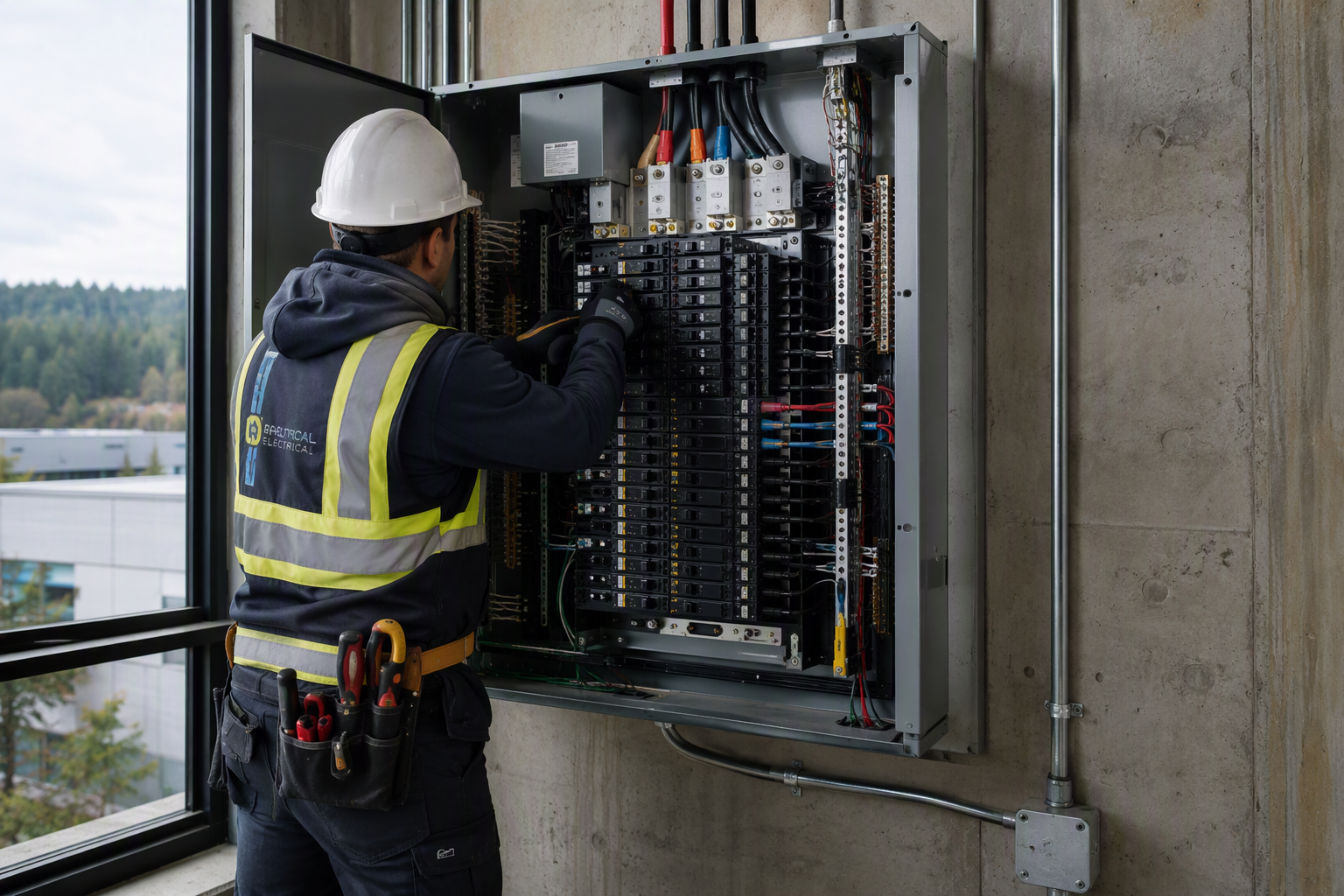
- Infrared thermographic inspections: NFPA 70B specifically recommends infrared (IR) scanning of electrical equipment under load as a primary diagnostic tool. IR scanning identifies hot connections, overloaded circuits, and failing components before they cause outages or fires — non-invasively, while the building is operating.
- Documentation and records: Every inspection, finding, and corrective action must be documented. Records are the evidence that maintenance was performed — and the evidence that a finding was addressed rather than ignored.
For commercial landlords in King, Snohomish, Pierce, and Whatcom counties, the practical implication is straightforward: if you don't have a written electrical maintenance program with dated records, you don't have a defensible maintenance posture.
A Practical Electrical Maintenance Framework for Puget Sound Commercial Buildings
Here's how a well-structured electrical maintenance program breaks down across three intervals — monthly, quarterly, and annual — with clear guidance on what building staff can handle and what requires a licensed electrical contractor.
Monthly: Visual and Audible Walkthroughs
These tasks are non-invasive and can be performed by trained building maintenance staff. They don't require opening energized equipment.
- Walk every electrical room. Confirm that the required working clearance in front of panels and switchgear is maintained. NEC 110.26 requires a minimum of 36 inches of clear working space in front of electrical equipment — this space is not storage.
- Check for open panels and missing knockouts. Panel covers left off, missing breaker knockout fillers, and open junction boxes are code violations and safety hazards.
- Listen at panels and transformers. Buzzing, arcing sounds, or a change in the normal hum are early warning signs of loose connections or failing equipment.
- Smell for hot insulation. A burning or hot plastic smell near electrical equipment is a serious warning sign that warrants immediate attention from a licensed electrician.
- Test exit and emergency egress lighting. Log which units pass and which fail. Emergency lighting failures are a life safety issue and a code violation.
- Note tripped breakers. A breaker that trips repeatedly is telling you something. Document it and investigate — don't just reset it.
- Check for temporary wiring that has become permanent. Extension cords and power strips used as permanent wiring are among the most common electrical violations in commercial buildings.
Quarterly: Deeper Checks
- Test all GFCI devices in wet locations, kitchens, bathrooms, outdoor areas, and rooftop equipment areas per NEC 210.8 requirements.
- Exercise generator and transfer switch equipment. Run the generator under load and verify automatic transfer switch operation. Log run time, voltage, and any anomalies.
- Inspect exterior and parking lot lighting after dark. Outages in parking areas are a safety and liability issue — and they're only visible at night.
- Check surge protective device (SPD) status indicators. Many whole-building surge protectors have LED status indicators that go dark after absorbing a significant surge. A dark indicator means the device is no longer providing protection and needs replacement.
- Verify panel schedules. Panel directories should accurately reflect the circuits they serve. After tenant improvements, equipment changes, or remodeling, panel schedules frequently become inaccurate — creating dangerous confusion during emergencies.
Annual: Licensed Electrician Scope
This work requires a licensed electrical contractor, appropriate personal protective equipment (PPE) per NFPA 70E, and in most cases a planned maintenance window.
Infrared thermographic survey. An IR scan of panels, switchgear, disconnects, and motor control centers under load is the single highest-value annual task for most commercial buildings. It identifies hot connections — the leading cause of electrical fires and unplanned outages — before they fail. The scan is non-invasive and can typically be performed while the building is operating. In the Puget Sound market, an IR scan for a typical commercial building runs 1,000–1,000–3,000 depending on the size and complexity of the electrical system.
Torque verification and connection service. Electrical connections loosen over time through thermal cycling — the repeated expansion and contraction of conductors as they heat and cool under load. Verifying terminations to manufacturer torque specifications, cleaning oxidized connections, and re-terminating where needed addresses the most common root cause of electrical fires and unplanned outages in commercial buildings.
Equipment cleaning and inspection. Dust, moisture intrusion, and pest activity inside electrical enclosures degrade insulation and can bridge clearances between energized components. Switchgear and motor control center interiors should be cleaned and inspected on a defined interval, with findings photographed and documented.
Grounding and bonding verification. Ground electrode conductors, bonding jumpers, and equipment grounding connections should be inspected and tested. Grounding system integrity is the foundation of electrical safety — and it's almost never checked until sensitive equipment starts failing intermittently or a ground fault causes an injury.
Protective device review. Confirm that breaker and fuse ratings still match the loads they serve. In buildings where tenant fit-outs have changed the load profile, protective devices may no longer be correctly sized — creating both safety risks and nuisance tripping.
Arc flash labeling verification. The 2026 NEC (Section 110.16) has expanded arc flash labeling requirements for commercial service and feeder equipment. Non-dwelling unit service equipment must have labels specifying nominal system voltage, arc flash boundaries, assessment date, and required PPE levels. Annual review ensures labels are current and compliant.
What GCs and Construction Company Owners Need to Know Before They Build
For general contractors and construction company owners working on commercial projects in the Puget Sound area, the electrical condition of an existing building is a pre-construction risk factor — not a post-construction problem.
Here's what experienced GCs verify before a commercial build-out begins:
Service capacity. Does the existing electrical service have the capacity to support the new tenant's load? A building with a 200-amp main service that's already 80% loaded cannot support a restaurant, medical office, or fitness studio without a service upgrade. Discovering this after the lease is signed and the permit is submitted creates delays, cost overruns, and difficult conversations with the owner.
Panel availability. Is there room in the existing panel for the new circuits the build-out requires? A fully loaded panel means a subpanel installation — which adds cost and time to any project.
Existing wiring condition. In older commercial buildings — particularly those built before 1980 — existing wiring may be in poor condition or may use methods that are no longer code-compliant. Discovering knob-and-tube wiring, aluminum branch circuit wiring, or deteriorated cloth-insulated conductors mid-build-out is a budget and schedule problem.
Permit history. Has the electrical work in this building been permitted and inspected? Unpermitted electrical work creates liability for the GC, the owner, and the tenant — and can surface during final inspection in ways that are expensive to resolve.
As-built documentation. Does the owner have accurate as-built drawings and panel schedules? A building without current electrical documentation requires more time and cost to assess before work begins.
The GCs who build the best relationships with commercial property owners in this market are the ones who ask these questions before they bid — not after they've broken ground.
Building Your Electrical Maintenance Program: Where to Start
If your commercial building doesn't have a written electrical maintenance program — or has one that hasn't been executed in years — here's a practical starting point:
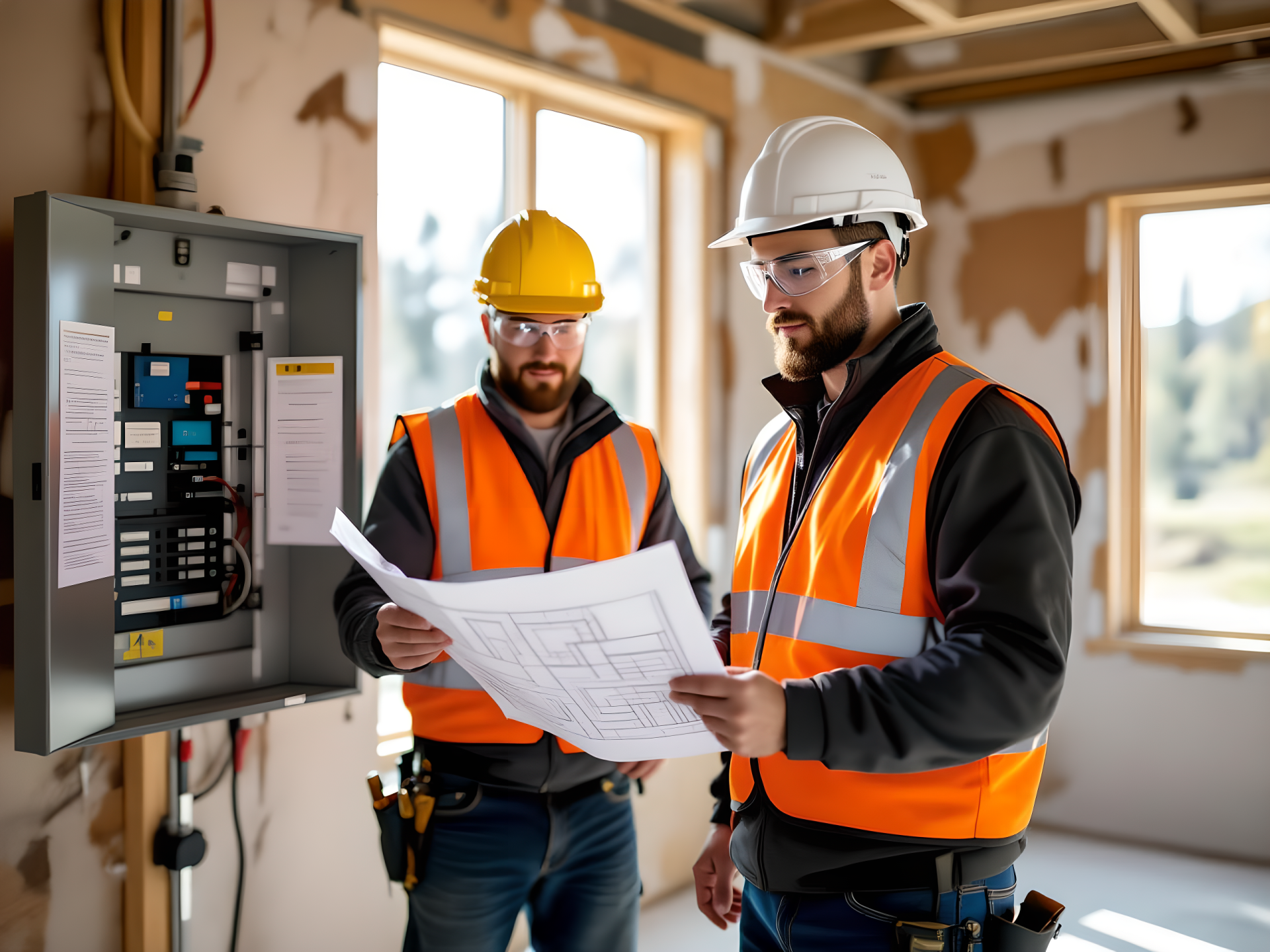
- Schedule a baseline electrical assessment. A licensed commercial electrician walks the building, documents the condition of all electrical equipment, identifies deferred maintenance items, and produces a written report. This is the foundation of your maintenance program.
- Prioritize the annual IR scan. If you do nothing else this year, schedule an infrared thermographic survey of your electrical equipment. It's the fastest way to identify hidden risks in an existing system.
- Establish a written maintenance log. Even a simple spreadsheet that records inspection dates, findings, and corrective actions is better than nothing. The goal is a documented record that demonstrates the building is being maintained.
- Budget for electrical maintenance as a capital line item. Electrical maintenance is not a discretionary expense — it's a capital preservation strategy. For most small-to-mid-size commercial buildings, annual electrical maintenance costs run 2,000–2,000–8,000 depending on building size, system complexity, and the number of electrical assets requiring service. That's a fraction of the cost of an emergency service call, an unplanned outage, or a failed building inspection during a sale.
- Coordinate with your electrical contractor before tenant improvements. Every TI is an opportunity to address deferred maintenance items while the walls are open and the work is already mobilized. A proactive landlord uses TI projects to systematically improve the building's electrical infrastructure — not just to satisfy the incoming tenant's requirements.
Working With a Local Electrical Contractor Who Understands Commercial Buildings
Electrical preventive maintenance isn't a commodity service. It requires a contractor who understands commercial building systems, knows what Washington State inspectors look for, and can translate technical findings into plain-language recommendations that property owners and GCs can act on.
At System Solutions of Washington, we work with commercial property owners, developers, and general contractors across King, Snohomish, Pierce, and Whatcom counties. Our team has over 150 years of combined experience on commercial and industrial electrical projects throughout the greater Puget Sound area — from ground-up new construction to complex tenant improvement build-outs, service upgrades, and infrastructure assessments.
We can help you establish a baseline electrical assessment for your building, develop a maintenance program that satisfies insurance and lender requirements, and identify the deferred maintenance items that are most likely to affect your building's value, your tenants' operations, and your liability exposure.
Ready to Know the True Condition of Your Building's Electrical System?
Whether you're a commercial landlord preparing for a new tenant, a property owner planning a capital improvement program, or a GC evaluating an existing building before a build-out, a baseline electrical assessment is the right place to start.
Contact System Solutions of Washington to schedule a commercial electrical assessment. We'll evaluate your building's service capacity, panel condition, maintenance history, code compliance status, and arc flash labeling — and give you a clear, documented picture of where your system stands.
📞 (425) 249-2076 ✉️ fredw@systemsolutionswa.com 🌐 systemsolutionswa.com
Serving commercial property owners and general contractors throughout Seattle, Everett, Bellevue, Lynnwood, and communities across King, Snohomish, Pierce, and Whatcom County.
System Solutions of Washington LLC is a licensed electrical contractor based in Lynnwood, WA. All electrical work is performed by certified electricians in compliance with Washington State L&I requirements and the adopted National Electrical Code. This post is intended for general informational purposes. Consult a licensed electrician for assessments specific to your building.