What Every Puget Sound Commercial Landlord Needs to Know About Electrical Before Their Next Tenant Moves In
You've signed the lease. The tenant is excited. The build-out is about to begin.
Then the electrician walks the space and delivers the news: the building's electrical service is undersized for what the tenant needs. The panel has no room for new circuits. Bringing the system up to what the work letter promised is going to cost $40,000 — and nobody budgeted for it.
This scenario plays out regularly in commercial buildings across the Puget Sound region, from older retail strips in Everett to industrial flex space in Lynnwood and office buildings throughout King and Snohomish County. And in almost every case, it was preventable.
This guide is written for commercial property owners and land developers in the Pacific Northwest who want to understand the electrical side of tenant relationships — before a lease is signed, before a work letter is negotiated, and before a build-out begins.
Why Electrical Is the Most Financially Consequential Part of a Commercial Lease
Commercial electricity prices rose approximately 26% between 2019 and 2025, according to analysis by Lawrence Berkeley National Laboratory and The Brattle Group. A separate JLL report found that commercial buildings account for roughly 75% of U.S. electricity consumption — and that aging building infrastructure is increasingly unable to handle modern tenant loads.
For Puget Sound landlords, this isn't abstract. It means:
- Tenants are arriving with higher electrical demands than ever before — EV charging for employees, high-density server rooms, commercial kitchen equipment, advanced HVAC systems
- An undersized electrical service is a deal-breaker for many prospective tenants
- Electrical deficiencies discovered mid-negotiation or mid-build-out create costly delays, renegotiated lease terms, and damaged landlord-tenant relationships
- The cost of proactive electrical upgrades is almost always lower than the cost of reactive ones
The landlords who understand their building's electrical capacity — and who have a clear plan for how TI electrical work will be handled — consistently attract better tenants, negotiate stronger leases, and protect their net operating income.
The Legal Foundation: Washington Commercial Leases Are Purely Contract-Driven
Before getting into the electrical specifics, it's important to understand the legal framework that governs commercial property in Washington State.
Unlike residential rentals — which are governed by RCW 59.18 and include a statutory implied warranty of habitability requiring landlords to maintain working electrical systems — commercial leases in Washington have no equivalent statutory protection. Washington's commercial landlord-tenant law (RCW 59.04) imposes no implied warranty of habitability on commercial properties. Maintenance responsibilities, including electrical systems, are determined entirely by the written lease agreement.
This means two things for commercial landlords:
- What you agree to in the lease is what you're obligated to deliver. If the work letter says the landlord will provide a 400-amp service with a fully equipped electrical room, that's a contractual commitment.
- What you don't specify in the lease creates ambiguity — and ambiguity in commercial leases almost always leads to disputes, delays, and cost overruns.
Understanding exactly what your building's electrical system can and cannot support — before you sit down to negotiate — is the foundation of a well-structured commercial lease.
Shell Delivery Conditions: What You're Actually Promising the Tenant
One of the most consequential electrical decisions a landlord makes happens before a tenant is even identified: how the space will be delivered. The three most common delivery conditions in commercial leasing each have distinct electrical implications.
Cold Dark Shell
A cold dark shell delivers the building structure, exterior walls, slab, and roof — with utilities stubbed to the space but no electrical distribution inside. There is no panel, no lighting, no outlets, no HVAC. The tenant (or landlord, depending on the work letter) builds everything from scratch.
Electrical implications for landlords: You need to ensure the building's main service is adequately sized to support the tenant's anticipated load. If a restaurant tenant needs 400 amps and your building's main service is 200 amps, that's a utility upgrade conversation that needs to happen before the lease is signed — not after.
Warm Vanilla Shell
A warm vanilla shell typically includes a basic electrical panel, lighting in common areas, and enough infrastructure for a standard office or retail build-out. It's the most common delivery condition for multi-tenant retail and office buildings in the Puget Sound market.
Electrical implications for landlords: The panel size and circuit capacity you deliver in a vanilla shell directly affects what tenants can do without triggering a service upgrade. A 100-amp panel delivered to a prospective restaurant or medical tenant is essentially a non-starter. Know what you're delivering and what it can support.
Second-Generation Space
Second-gen space is a previously built-out suite. It may have existing panels, circuits, lighting, and data infrastructure — but it was designed for a previous tenant's specific needs, which may or may not match the incoming tenant's requirements.
Electrical implication for landlords: Never assume second-gen electrical is adequate for a new tenant. A former insurance office wired for computers and task lighting is not ready for a dental practice, a commercial kitchen, or a fitness studio. Have the existing electrical assessed before marketing the space.
The Work Letter: Where Electrical Responsibility Is Actually Defined
The tenant improvement (TI) work letter is the construction exhibit attached to a commercial lease. It defines what the landlord delivers, what the tenant builds, who pays for what, and how the process is managed. According to commercial real estate attorneys at Hollander Real Estate Law, TI provisions are among the most heavily negotiated sections of any commercial lease — and the electrical scope is consistently one of the most contentious elements.
Here's what every Puget Sound commercial landlord should ensure is clearly defined in the work letter:
1. Base Building Electrical Scope
Specify exactly what electrical infrastructure the landlord is delivering:
- Main service amperage and voltage
- Panel location, size, and available circuit capacity
- Whether conduit, wire, or devices are included
- Metering configuration (single meter vs. sub-metered)
- Emergency and exit lighting in common areas
2. Tenant Electrical Scope
Define what the tenant is responsible for building:
- Branch circuit wiring within the suite
- Lighting fixtures and controls
- Specialty circuits (dedicated appliance circuits, EV chargers, server room power)
- Low-voltage systems (data, security, AV)
3. Who Pulls Permits
Under Washington State law (RCW 19.28), all electrical work must be performed by a licensed electrical contractor. Permits are required for virtually all commercial electrical work. The work letter should clearly state whether the landlord's contractor or the tenant's contractor is responsible for pulling permits and scheduling inspections with Washington State L&I or the local Authority Having Jurisdiction (AHJ).
4. Panel Upgrade Triggers
This is the clause most landlords wish they had included after the fact. If the tenant's electrical load requires a panel or service upgrade beyond what the landlord is delivering, who pays? Define this explicitly. Common approaches include:
- Landlord pays for base building service upgrades; tenant pays for suite-level panel upgrades
- Costs above a defined threshold are split or credited against the TI allowance
- Service upgrades are amortized into the lease term
5. Restoration Requirements
When the lease ends, what happens to the electrical improvements? In Washington commercial leases, tenant improvements generally become the landlord's property at lease expiration unless the lease specifies otherwise. Define whether the tenant is required to restore the space to its original electrical condition or whether improvements can remain.
The Five Electrical Issues That Derail Puget Sound Commercial Build-Outs
Based on the types of projects commercial electrical contractors handle across King, Snohomish, Pierce, and Whatcom counties, these are the most common electrical problems that surface during TI build-outs — and how to prevent them.
1. Undersized Main Service
The most common and most expensive surprise. A building with a 200-amp main service that attracts a restaurant, fitness studio, or medical tenant will almost certainly require a service upgrade. In the Puget Sound market, a commercial service upgrade can range from 15,000to15,000to50,000 or more depending on the scope, utility coordination requirements with Puget Sound Energy or Snohomish County PUD, and whether the meter base and service entrance equipment need replacement.
Prevention: Have a licensed electrician perform a load calculation on your building's current service before marketing the space. Know your capacity ceiling.
2. No Room in the Panel
Even when the main service is adequate, an existing panel that's fully loaded — no available breaker slots — forces the installation of a subpanel or a panel replacement. This adds cost and time to any build-out.
Prevention: When assessing your building's electrical readiness, count available breaker slots. A panel with fewer than 6–8 open slots is effectively full for most commercial build-outs.
3. Outdated Wiring Methods
Older commercial buildings in the Puget Sound area — particularly those built before 1980 — may contain wiring methods that are no longer code-compliant or that create problems when new circuits are added. Knob-and-tube wiring, aluminum branch circuit wiring, and cloth-insulated conductors are all common in older commercial stock.
Prevention: If your building was constructed before 1980, have the electrical system assessed before entering lease negotiations. Discovering outdated wiring mid-build-out is a timeline and budget killer.
4. Missing Arc Flash Labeling
The 2026 NEC (Section 110.16) has expanded arc flash labeling requirements for commercial service and feeder equipment. Non-dwelling unit service equipment — including the main electrical rooms in office buildings, retail strips, and industrial facilities — must have clear labels specifying nominal system voltage, arc flash boundaries, assessment date, and required PPE levels. Missing or outdated labeling can trigger inspection failures and liability exposure. For a full breakdown of how the 2026 code changes affect commercial buildings in the Puget Sound, see our post on 2026 NEC updates affecting commercial buildings in the Puget Sound.
Prevention: Have your electrical rooms assessed and labeled before a tenant's contractor begins work. It's a low-cost item that prevents inspection delays.
5. Utility Coordination Delays
In the Puget Sound region, service upgrades that require utility involvement — new transformer installations, service entrance upgrades, or new meter installations — must be coordinated with Puget Sound Energy (PSE) or Snohomish County PUD. These utilities have their own review and scheduling processes that can add weeks or months to a project timeline.
Prevention: If your building may need a service upgrade to accommodate a new tenant, start the utility coordination process early — ideally before the lease is signed. Your electrical contractor can initiate the preliminary conversations with PSE or SnoPUD on your behalf.
What a Pre-Lease Electrical Assessment Should Cover
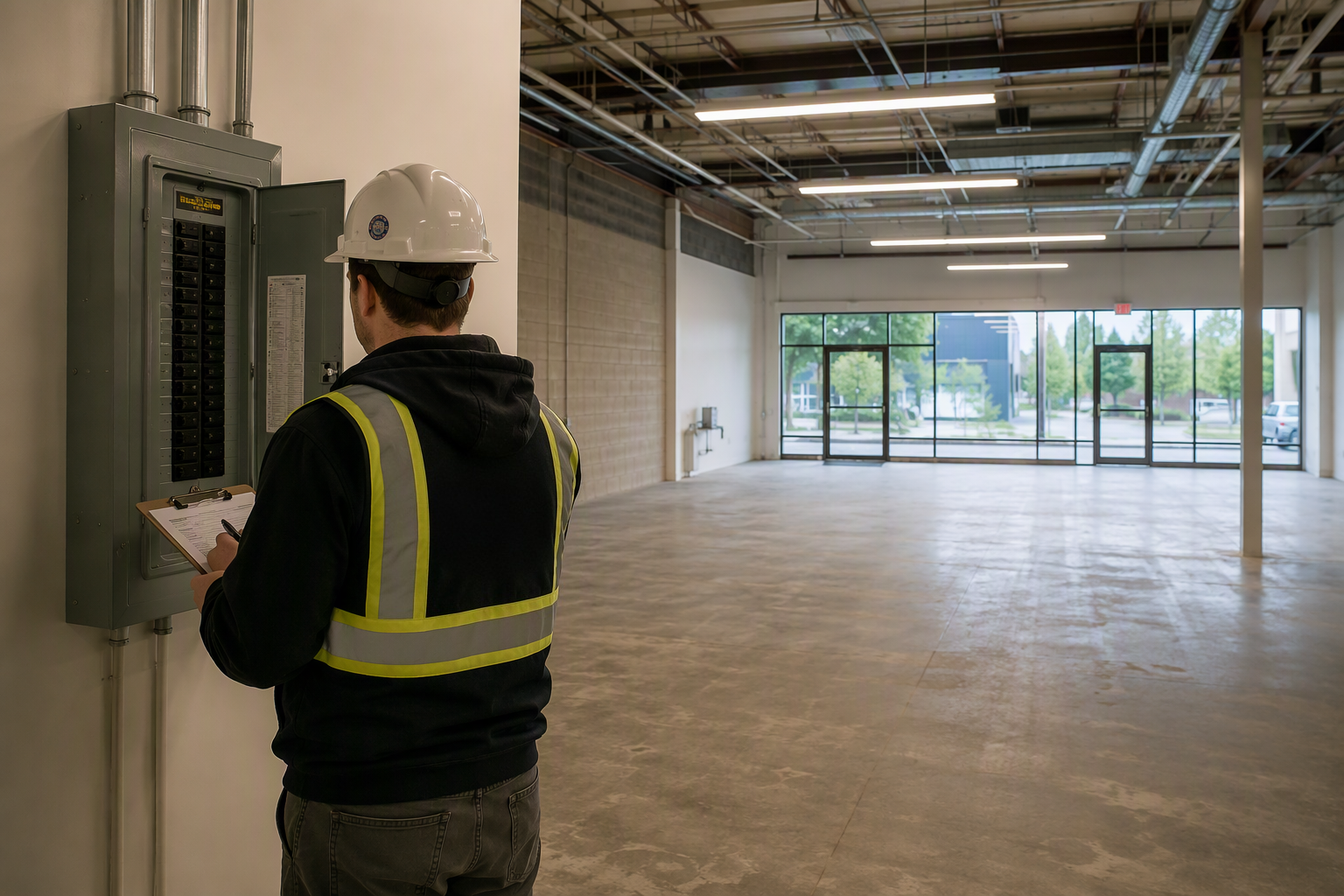
Before marketing a commercial space or entering lease negotiations, a pre-lease electrical assessment by a licensed commercial electrician should cover:
- Main service size and condition — amperage, voltage, service entrance equipment age and condition
- Panel inventory — number of panels, breaker capacity, available slots, labeling accuracy
- Wiring condition — identification of any outdated or non-compliant wiring methods
- Metering configuration — single meter vs. sub-metered, utility account structure
- Emergency and life safety systems — exit lighting, emergency egress circuits, fire alarm panel connections
- Arc flash labeling — current status and compliance with NEC 110.16
- EV readiness — available capacity for EV charging circuits, conduit pathways to parking areas
- Load calculation — formal calculation of current building load vs. available service capacity
This assessment gives you a clear picture of what your building can support, what it would cost to upgrade, and how to structure the electrical provisions of your next lease.
The Electrical Upgrades That Make Your Building More Leaseable
In the current Puget Sound commercial market, these electrical upgrades consistently expand your tenant pool and support stronger lease terms:
Service upgrade to 400 amps or higher — Opens the building to restaurant, medical, fitness, and technology tenants who require high electrical loads. A 200-amp service effectively excludes these categories.
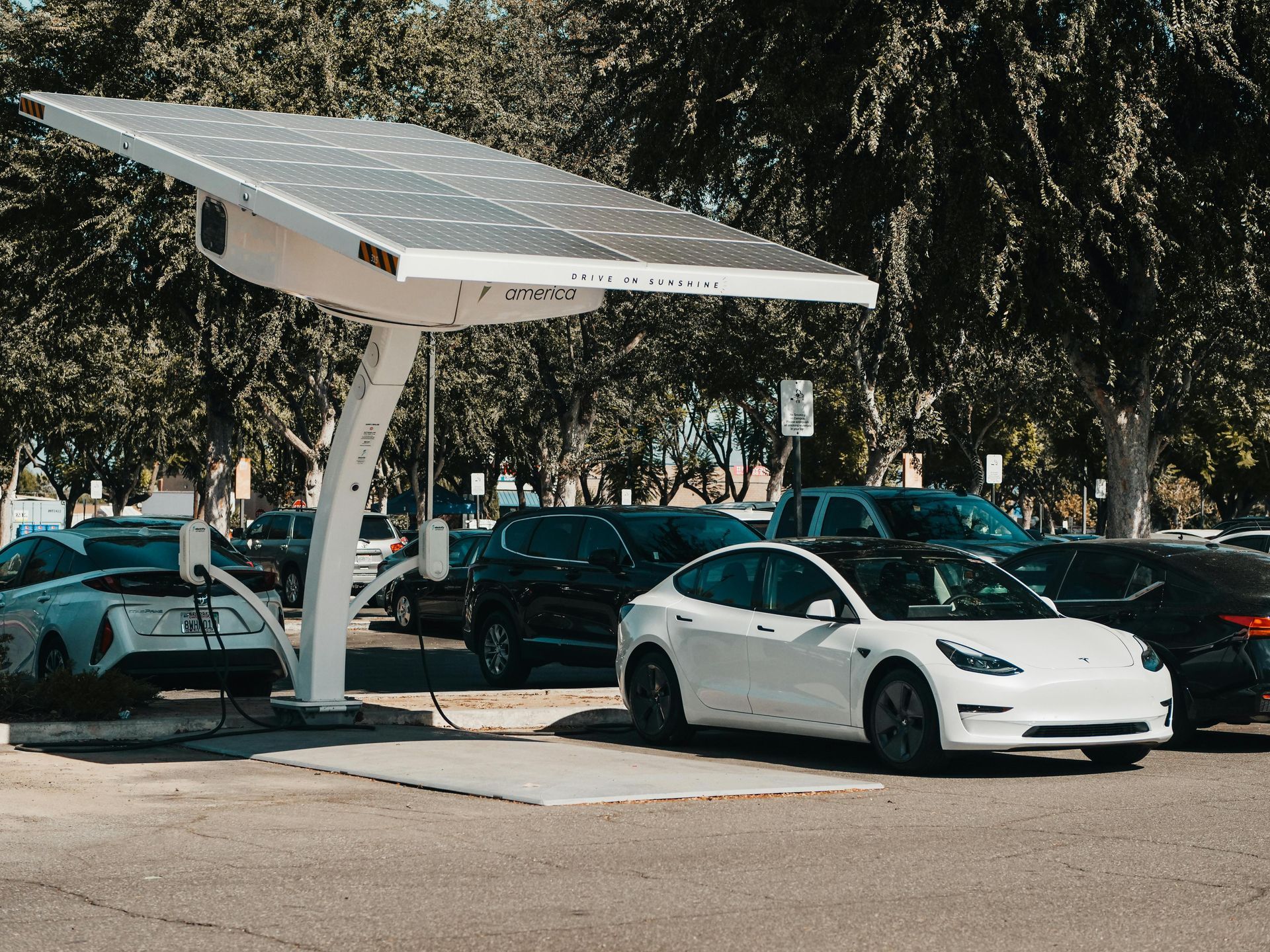
EV charging infrastructure — Washington State ranked third nationally in EV registrations in Q3 2025, with 24.2% of new vehicle sales being electric (Alliance for Automotive Innovation). Commercial tenants increasingly expect EV charging for employees and customers. Running conduit and dedicated circuits to parking areas during any electrical upgrade is far less expensive than retrofitting later.
Submetering — In multi-tenant buildings, individual submeters allow tenants to pay for their own electricity consumption rather than sharing costs through CAM charges. This is increasingly expected by sophisticated commercial tenants and simplifies lease administration.
Whole-building surge protection — Required under the 2026 NEC for many commercial occupancies, whole-building surge protection at the service entrance protects both the landlord's building systems and the tenant's equipment from voltage spikes.
Arc flash labeling and panel documentation — A fully labeled, documented electrical system signals to prospective tenants and their contractors that the building is professionally maintained. It also reduces liability exposure and speeds up permit approvals during build-outs.
Working With a Commercial Electrical Contractor Who Understands the Puget Sound Market
The electrical decisions you make as a commercial landlord — before a tenant signs, during a build-out, and at lease renewal — have a direct impact on your building's value, your tenant relationships, and your operating costs.
At System Solutions of Washington, we work with commercial property owners, developers, and building managers across King, Snohomish, Pierce, and Whatcom counties. Our team has over 150 years of combined experience on commercial and industrial electrical projects throughout the greater Puget Sound area — from ground-up new construction to complex tenant improvement build-outs, service upgrades, low-voltage systems, and EV charging infrastructure.
We understand the local utility coordination process with PSE and SnoPUD. We know what Puget Sound inspectors look for. And we can help you assess your building's electrical readiness before your next lease negotiation — so you're negotiating from a position of knowledge, not discovering problems mid-build-out.
Ready to Know What Your Building Can Actually Support?
Whether you're preparing a space for a new tenant, evaluating a building acquisition, or planning capital improvements to attract higher-quality tenants, a pre-lease electrical assessment is one of the highest-return investments a commercial landlord can make.
Contact System Solutions of Washington to schedule a commercial electrical assessment. We'll evaluate your building's service capacity, panel condition, code compliance status, and EV readiness — and give you a clear picture of what it would take to make your space ready for your next tenant.
📞 (425) 249-2076 ✉️ fredw@systemsolutionswa.com 🌐 systemsolutionswa.com
Serving commercial property owners throughout Seattle, Everett, Bellevue, Lynnwood, and communities across King, Snohomish, Pierce, and Whatcom County.
System Solutions of Washington LLC is a licensed electrical contractor based in Lynnwood, WA. All electrical work is performed by certified electricians in compliance with Washington State L&I requirements and the adopted National Electrical Code. This post is intended for general informational purposes and does not constitute legal or financial advice. Consult a licensed attorney for lease-specific legal questions.