The Complete Guide to Commercial EV Charging Station Installation for Puget Sound Businesses
COMMERCIAL ELECTRICAL | EV INFRASTRUCTURE | BUSINESS GUIDE
What every property owner, fleet manager, and facility director in King, Snohomish, and Pierce County needs to know in 2025–2026
By the Electrical Experts at System Solutions of Washington — Licensed Commercial & Industrial Electrical Contractor — Lynnwood, WA | systemsolutionswa.com
EV Charging Commercial Electrical Puget Sound Washington State NEC 2026
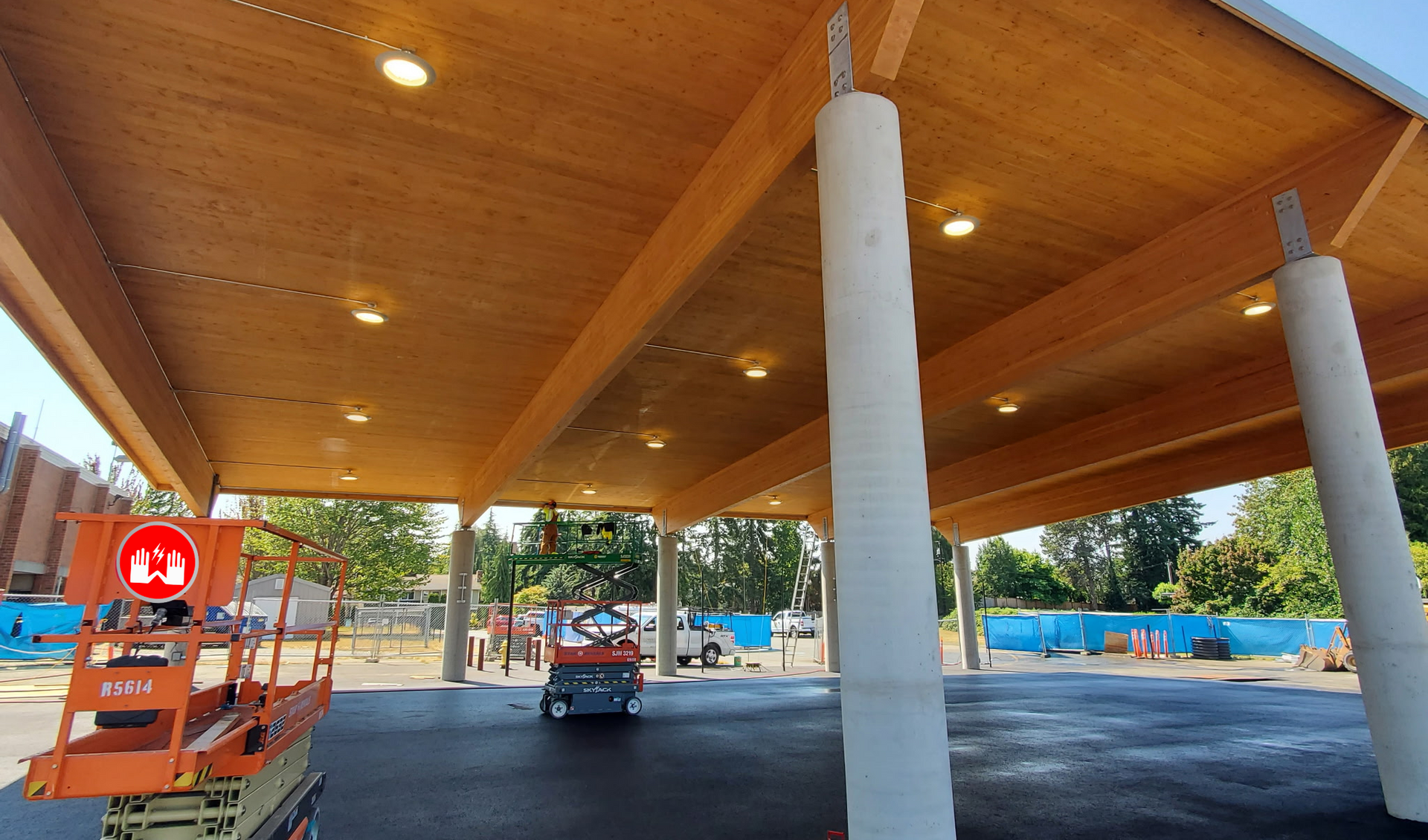
Commercial EV charging station installation in a business parking facility — the new standard for Puget Sound properties competing for customers, employees, and tenants.
If you own or manage a commercial property in Seattle, Bellevue, Everett, Lynnwood, Tacoma, or anywhere else in the greater Puget Sound area, a question that was once optional is now urgent: does your facility have EV charging? Washington State had nearly 224,000 registered electric vehicles on the road as of 2024 — a 34% increase from 2023 alone — with King County leading the state and Snohomish and Pierce Counties growing fast. During the second half of 2024, EVs accounted for over 20% of new vehicle title transactions in Washington — more than one in five new vehicles — and that number is climbing every quarter.
Your customers, employees, and tenants are driving those vehicles. When they pull into a competitor's parking lot and see Level 2 chargers, they notice. When your facility offers charging, they stay longer, spend more, and come back. For fleet operators and facility directors, electrification of company vehicles and employee parking is no longer a "future initiative" — it's an operational necessity with a concrete financial case.
The challenge is that commercial EV charging station installation is not a simple project. It involves electrical load analysis, utility coordination with Puget Sound Energy (PSE) or Seattle City Light, Washington State Labor & Industries (L&I) permitting, NEC 2026 Article 625 compliance, ADA-compliant parking design, potential panel or service upgrades, and often civil work for conduit and trenching. Done right, it's a strategic asset. Done wrong — by an unlicensed or inexperienced contractor — it becomes a liability: failed inspections, voided warranties, safety hazards, and costly rework.
At System Solutions of Washington, we are a licensed commercial and industrial electrical contractor based in Lynnwood, WA, and have delivered complex electrical installations across the Puget Sound region for decades — from transit facilities and municipal buildings to schools, car washes, and large commercial properties. This guide draws on real-world experience to give you a clear, authoritative picture of everything involved in installing commercial EV chargers in Washington State.
Why Washington State Businesses Can’t Afford to Wait
Washington State has set one of the most aggressive EV adoption targets in the country. The state's Clean Cars 2030 law establishes 2030 as an aspirational target for all new passenger and light-duty vehicles registered in Washington to be electric, while the binding regulatory zero-emission vehicle standard (Advanced Clean Cars II) requires all new light-duty cars sold in the state to be zero-emission by 2035. This dual-track policy is reshaping the transportation landscape across King, Snohomish, and Pierce Counties faster than many business owners realize.
The state's 2025–2027 capital budget authorized $19.4 million for the Washington Electric Vehicle Charging Program Round 2, building on the $98.4 million invested in Round 1 to install more than 5,000 charging ports statewide. This isn't a fringe initiative. It is a structural shift in how transportation infrastructure is funded and built in our state.
Beyond policy, the business case is straightforward:
- Customer dwell time increases when shoppers, diners, or hotel guests can charge while they spend time at your property.
- Employee recruitment and retention improve when companies offer workplace charging — a benefit that now ranks among the most valued workplace perks for EV owners.
- Commercial property value is increasingly tied to EV-ready infrastructure, particularly for Class A office, retail, and mixed-use properties seeking LEED certification or institutional tenants.
- Fleet cost reduction is measurable and significant: electric fleet vehicles have lower per-mile fuel costs and dramatically lower maintenance costs over time.
⚠ Important for Puget Sound Property Owners
With Seattle City Light's Business EV Charging Program and PSE's Up & Go Electric for Workplace offering rebates that can cover up to 100% of installation costs for qualifying businesses, the window to capture maximum incentive value is now. Incentive programs are competitive, and funds are finite — early movers benefit most.
In the greater Seattle area, EV adoption is accelerating faster than the statewide average, driven by high household incomes, dense urban charging infrastructure, and strong corporate sustainability commitments from major regional employers. In Snohomish County — System Solutions of Washington's home territory — the EV population is growing rapidly while public charging infrastructure still lags behind demand. Businesses that install commercial EV chargers now are filling a genuine infrastructure gap, not just following a trend.
Understanding EV Charging Levels: What’s Right for Your Business?
Not every business needs the same type of charger. The right solution depends on your customer dwell time, fleet requirements, available electrical capacity, and budget. Here is a practical breakdown of all three charging levels, followed by a side-by-side comparison table.
Level 1 Charging (120V AC)
Level 1 charging uses a standard 120-volt outlet — the same as any household receptacle — and delivers approximately 3 to 5 miles of range per hour of charging. For most commercial applications in the Puget Sound area, Level 1 is insufficient as a primary charging solution. It is occasionally appropriate for long-term employee parking at facilities where workers leave their vehicles for 8 or more hours (for example, an airport employee lot or a manufacturing facility with extended shift times). Even then, it provides only modest range restoration.
Level 1 requires no special electrical work beyond a properly rated outlet and circuit. However, it is rarely the right answer for a retail, office, or fleet environment.
Level 2 Charging (208–240V AC)
Level 2 is the sweet spot for the overwhelming majority of commercial installations across King, Snohomish, and Pierce Counties. Using 208V to 240V single-phase or three-phase power and circuits rated from 30A to 80A, Level 2 EVSE delivers 12 to 80 miles of range per hour of charging, with most commercial units providing 25–50 miles per hour.
A customer dining at a restaurant for 90 minutes can recover 40–60 miles of range. An employee charging during an 8-hour workday can fully charge a mid-size EV from near-empty. This is the technology behind PSE's Up & Go Electric for Workplace program and Seattle City Light's Business EV Charging Program — both of which provide rebates specifically for Level 2 commercial EVSE.
From an electrical contractor's standpoint, Level 2 commercial installation typically involves dedicated 40A to 60A circuits per charger (per NEC 625.41 — 125% continuous load rule), GFCI protection, conduit runs from the panel to the charging pedestals, and in many cases, panel upgrades or load management systems for multi-unit deployments.
DC Fast Charging (DCFC / Level 3)
DC Fast Chargers (also called Level 3 or DCFC) bypass the vehicle's onboard AC converter and deliver DC power directly to the battery. Modern commercial DCFC units deliver 50-350 kW, providing 100-200+ miles of range in 20–45 minutes. This is the technology used at highway corridor charging stations, transit facilities, fleet depots, and high-traffic retail destinations.
DCFC requires a three-phase electrical service, a dedicated high-capacity electrical panel or transformer, and in many cases a utility upgrade or service entrance replacement. Installation costs are substantially higher than Level 2, but so is the impact: a DCFC station at a truck stop, car wash, or grocery-anchored shopping center can become a genuine destination draw.
Washington State offers DCFC-specific incentives through programs such as the Washington Department of Ecology's "Charge Where You Are" grant program and the WAEVCP, in addition to federal tax credits.
| Charging Level | Voltage / Amperage | Approx. Range Added / Hour | Typical Install Cost Range | Best Commercial Use Case |
|---|---|---|---|---|
| Level 1 | 120V AC / 12–16A | 3–5 miles/hr | $500–$2,000 | Employee lots with 8+ hr dwell; supplemental only |
| Level 2 | 208–240V AC / 30–80A | 12–80 miles/hr | $3,000–$25,000 per port (installed) | Retail, office, hospitality, multifamily, fleet workplace |
| DCFC (Level 3) | 480V 3-phase / 100–500A+ | 100–250+ miles/hr | $50,000–$250,000+ per unit (installed) | Transit hubs, fleet depots, highway corridors, high-traffic retail |
Note: Installed costs include equipment, electrical labor, conduit, panel work, permitting, and inspection. Costs vary significantly based on distance from the panel, existing service capacity, number of units, and site conditions. A site assessment by a qualified commercial electrical contractor is the only reliable way to obtain an accurate project estimate.
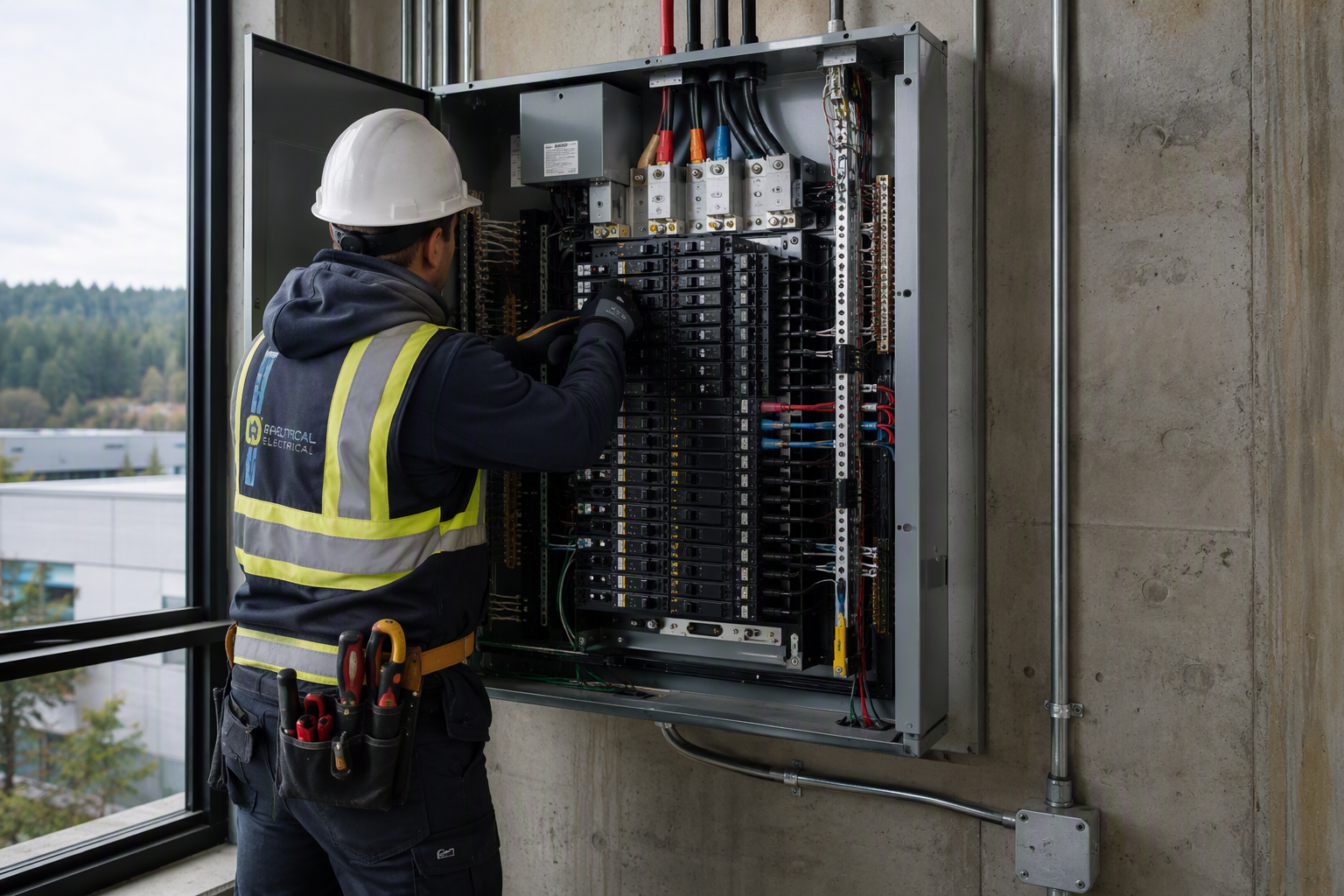
Commercial EVSE installation encompasses far more than mounting a charger — it requires a full electrical system assessment, permitting, utility coordination, and code-compliant wiring infrastructure.
What Does Commercial EV Charger Installation Actually Involve?
One of the most common misconceptions we encounter when businesses across the Puget Sound area first call System Solutions of Washington is the assumption that commercial EV charger installation is comparable to plugging in an appliance or even to residential charger installation. It is not. Commercial EVSE installation is a multi-phase electrical project that, depending on the scope, can involve civil engineering, utility coordination, and significant panel infrastructure work.
Here is what a professional, code-compliant commercial EV charger installation actually looks like, step by step:
Step 1 — Site Assessment & Load Analysis: A licensed commercial electrician visits your facility to evaluate your existing electrical service size, available panel capacity, the number of chargers needed, their locations, distances from the panel, and the load they will add. For a business with an existing 200A or 400A service, adding multiple Level 2 chargers may require a service upgrade. Load calculations follow NEC Article 220 and must account for existing connected loads, demand factors, and EV charging as a continuous load (125% rule per NEC 625.41).
Step 2 — Equipment Selection: Your contractor helps you select the right EVSE brand and model for your application — networked vs. non-networked, smart energy management capable, OCPP-compliant for rebate program eligibility, and appropriate amperage for your use case. PSE and Seattle City Light rebates often specify approved equipment lists.
Step 3 — Utility Coordination: For larger Level 2 deployments and all DCFC installations, the electrical contractor coordinates with your utility (PSE, Seattle City Light, Snohomish County PUD, or Tacoma Power) to confirm service capacity, request upgrades if needed, and ensure interconnection compliance. This can take weeks to months — starting early is critical.
Step 4 — Permit Application: A Washington State L&I electrical permit is required for all commercial EVSE installations. Your licensed electrical contractor pulls this permit — never a handyman or unlicensed subcontractor. The permit application requires electrical drawings, load calculations, and equipment specifications.
Step 5 — Civil Work (Trenching & Conduit): Electrical conduit must be run from your panel to each charging location. In parking lots, this typically means trenching, installing conduit, pulling conductors, and backfilling. For large commercial lots, this can be the most labor-intensive phase of the project.
Step 6 — Panel Upgrades & Branch Circuit Installation: Dedicated branch circuits are installed for each charger. If your panel lacks capacity, a sub-panel, additional main breaker capacity, or a full service upgrade may be required. Smart energy management systems (per NEC 625.42) can allow multiple chargers to share a single circuit — a cost-effective solution for multi-unit deployments.
Step 7 — EVSE Mounting & Wiring: Charging pedestals or wall-mounted units are installed, wired, and connected per manufacturer specifications and NEC Article 625 requirements, including GFCI protection (625.54) and proper disconnecting means.
Step 8 — L&I Inspection: A Washington State L&I electrical inspector reviews the completed installation for NEC compliance before the system can be energized. Only work permitted and performed by a licensed contractor will pass inspection.
Step 9 — Commissioning & Testing: The contractor energizes the system, tests each charger with an EV, verifies network connectivity (for networked units), and confirms all safety systems operate correctly. The facility owner receives documentation of the completed installation.
⚠ Red Flag: This Is NOT a DIY or Handyman Job
Commercial EV charger installation in Washington State requires an L&I electrical permit, a licensed electrical contractor (EL01 license for general commercial work), and a state inspection. Unpermitted EVSE installations are illegal, void equipment warranties, jeopardize your insurance coverage, and create genuine fire and electrocution hazards. If a contractor offers to "skip the permit to save money," walk away immediately.
Navigating Washington State Permits, Codes & Utility Requirements
Commercial EV charger installation in Washington State operates under a layered compliance framework. Understanding each layer — and having a contractor experienced in navigating all of them — is the difference between a smooth project and a costly, time-consuming ordeal.
NEC 2026 Article 625 (EVSE)
Washington State adopts the National Electrical Code (NEC) through WAC 296-46B, administered by the Department of Labor & Industries. The 2026 NEC brings significant updates to Article 625, which governs all electric vehicle supply equipment. Key requirements affecting commercial installations include:
- Continuous Load Rule (625.41): EV charging is classified as a continuous load. All circuits must be rated at 125% of the maximum charger output. A 48A charger requires a 60A circuit — not a 50A circuit.
- Dedicated Branch Circuits (625.42): Each EVSE must have a dedicated circuit unless an approved Energy Management System (EMS) under NEC Article 750 is used to dynamically share circuit capacity among multiple units.
- GFCI Protection (625.54): All commercial EVSE must have GFCI protection. Most listed commercial chargers include built-in GFCI; in such cases, a separate GFCI breaker must not be stacked on the same circuit (causes nuisance tripping).
- New Article 624 (2026 NEC): The 2026 NEC introduces a distinct Article 624 for Electric Self-Propelled Vehicles (ESVs) such as forklifts, golf carts, and marine vessels, separating them from standard EV charging under Article 625.
- Enhanced Ground Fault Protection and Disconnecting Means: The 2026 NEC emphasizes qualified installation, proper labeling, and accessible disconnecting means for all EVSE — particularly important for fleet and public-access installations.
Washington State L&I Electrical Permits
All commercial EVSE installations in Washington require an electrical permit issued by the Department of Labor & Industries. The permit must be pulled by a licensed electrical contractor holding an active EL01 (General Electrical Contractor) license. Permit applications require load calculations, electrical drawings, and equipment specifications. L&I inspectors conduct on-site inspections before the system is energized.
ADA Compliance Requirements
Commercial EV charging installations that serve the public or employees must comply with ADA accessibility standards. Key requirements include accessible route connectivity from accessible parking spaces to the charging equipment, minimum clear floor/ground space at each accessible charger, accessible reach range for charger controls and connectors, and proper signage. Facility managers in Seattle, Bellevue, Everett, and Tacoma should consult with their contractor on ADA-compliant charger placement during the site design phase — retrofitting for ADA compliance after installation is expensive.
Utility Coordination: PSE and Seattle City Light
For businesses in PSE's service territory (most of Snohomish County and portions of King County), DCFC installations and large multi-unit Level 2 deployments will require utility coordination for a service capacity review and, potentially, a transformer upgrade. Businesses in Seattle City Light's territory face a similar process. Both utilities offer dedicated EV infrastructure teams and rebate programs — engaging them early in the project planning process is essential. System Solutions of Washington has direct experience coordinating with both PSE and Seattle City Light on commercial electrical projects, which meaningfully accelerates the timeline.
Available Incentives and Rebates for Washington Businesses
The financial case for commercial EV charging installation has never been stronger, thanks to a layered stack of federal, state, and utility incentives available to Puget Sound businesses in 2025–2026. Here is a practical overview of the programs currently open:
Federal Tax Credit: IRS Section 30C (Form 8911)
The Alternative Fuel Vehicle Refueling Property Credit (Section 30C of the Internal Revenue Code) provides a federal tax credit for the cost of installing EV charging equipment at a business location. For commercial properties, the credit can reach 30% of qualified installation costs, subject to prevailing wage and apprenticeship requirements for larger projects. This credit applies to both equipment and installation costs. Consult a qualified tax professional for current eligibility rules — federal incentive provisions are subject to legislative change.
Washington State Department of Commerce — WAEVCP
The Washington Electric Vehicle Charging Program (WAEVCP) provides competitive grants to public agencies, private businesses, tribal entities, utilities, and nonprofits for EV charging installation. Round 1 distributed $98.4 million for 5,000+ charging ports statewide. Round 2 will award at least $19.4 million, with awards anticipated to be announced by March 2026. Categories include multifamily residential, public charging, and fleet/workplace charging. Private entities may apply with additional requirements.\
Puget Sound Energy (PSE) — Up & Go Electric for Workplace
PSE's program for business customers offers two tracks:
- PSE-Owned Track: PSE covers up to 100% of installation and maintenance costs, up to $12,000 per Level 2 port for up to 10 ports per property. PSE handles all equipment purchasing, site design, construction, and inspection coordination.
- Customer-Owned Track: PSE reimburses up to $2,000 per Level 2 port (or 50% of project cost, whichever is less) for up to 10 ports per property. Qualifying businesses serving highly impacted communities may be eligible for enhanced Empower Mobility incentives of up to $4,000 per port or 100% of project cost.
Seattle City Light — Business EV Charging Program
Seattle City Light offers free site and fleet assessments, application assistance, and direct incentives for Level 2 and fleet charging installations. The program covers workplace and fleet charging, with the goal of helping businesses "save up to 100% of costs for eligible charging infrastructure." Businesses are strongly encouraged to connect with Seattle City Light early in the project to secure incentive reservations before funds are committed.
Volkswagen Settlement — Charge Where You Are (WSDOT)
Washington's portion of the Volkswagen emissions settlement funds the "Charge Where You Are Connecting Washington" program through Ecology. For public DCFC installations, the program can cover up to 80% of costs, with a cap of $150,000 per station. Government property installations on behalf of overburdened communities may be eligible for 100% cost coverage.
💡 Pro Tip: Stack Your Incentives
Savvy Puget Sound businesses are stacking incentives — combining a federal Section 30C tax credit with a PSE or Seattle City Light rebate and a WSDOT grant to dramatically reduce net project costs. However, program stacking rules vary, and the availability of incentives changes. Always engage your electrical contractor and a tax professional before finalizing your installation plan, not after.
How to Choose the Right Commercial Electrical Contractor for EV Charger Installation
With commercial EV charging becoming a high-value infrastructure investment, a wave of contractors — many without appropriate credentials or experience — are promoting themselves as EV charger installers across King, Snohomish, and Pierce Counties. Choosing the wrong contractor can mean failed inspections, voided rebates, safety hazards, and the cost of ripping out and redoing non-compliant work. Here is exactly what to look for, and what to avoid.
Essential Qualifications Required
- Washington State EL01 Electrical Contractor License: This is the general electrical contractor license issued by L&I that authorizes all types of commercial and industrial electrical installations. Verify the contractor's license at L&I's online lookup tool before signing any contract. An expired, suspended, or wrong-category license is an immediate disqualifier.
- Bonded and Insured: Licensed electrical contractors in Washington are required to carry a $4,000 surety bond. Commercial work demands adequate general liability insurance. Ask for certificates of insurance before work begins.
- Demonstrated Commercial and Industrial Experience: Installing a Level 2 charger in a commercial parking garage with a 400A three-phase service is fundamentally different from a residential installation. Ask specifically about comparable commercial projects: parking facilities, fleet depots, municipal buildings, schools, or industrial facilities.
- Familiarity with EVSE Brands and Networked Systems: Experienced commercial EV charger electricians understand the differences between ChargePoint, Blink, Eaton, Siemens, Clipper Creek, and other leading platforms — including network integration, OCPP compliance, and smart load management configuration.
- Utility Interconnection Experience: Contractors who have worked directly with PSE, Seattle City Light, Snohomish PUD, or Tacoma Power on commercial service upgrades and EVSE interconnections bring irreplaceable value to your project timeline.
- Permit Compliance Track Record: Ask directly: "Will you pull the L&I electrical permit for this project?" The answer must be yes, without exception.
Red Flags to Walk Away From
- "We can skip the permit to save you money" — This is illegal in Washington State and will expose you to fines, voided insurance, and non-compliant installations.
- No verifiable EL01 license number — Any contractor who cannot provide an active, verifiable L&I license is operating illegally on commercial electrical work in Washington.
- Only residential experience — Residential electricians are qualified for home installations but typically lack the three-phase power experience, commercial load calculation expertise, and utility coordination experience required for commercial EVSE projects.
- Vague or verbal-only quotes — A professional commercial electrical contractor provides written proposals that clearly document the scope of work, permit responsibility, equipment specifications, timeline, and payment terms.
- No references from comparable commercial projects — Any contractor worth hiring can provide references from business clients with a similar installation scope.
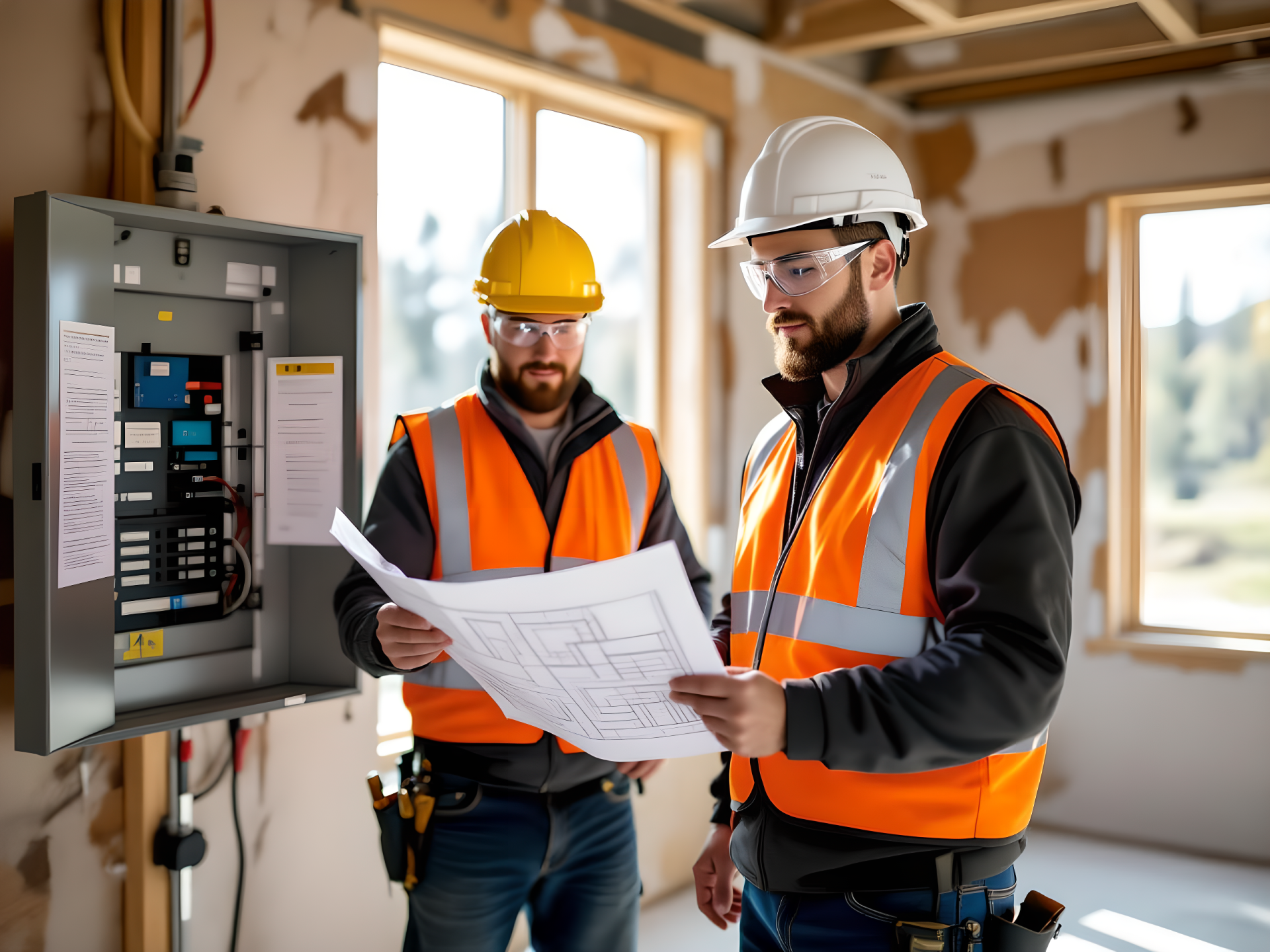
A properly installed commercial EV charging station becomes a genuine business asset — attracting customers, supporting employees, and qualifying for significant state and utility rebates.
Why System Solutions of Washington?
System Solutions of Washington is a licensed commercial and industrial electrical contractor based in Lynnwood, WA, serving businesses throughout the greater Puget Sound area — including King County, Snohomish County, and Pierce County. We are not a generalist shop that dabbles in commercial work. Commercial and industrial electrical is our core business, and commercial EV charger installation is a natural extension of the large-scale electrical infrastructure work we have delivered across this region for years.
Our team brings 150+ years of combined electrical industry experience, with certified master electricians and journeymen trained in complex commercial and industrial electrical systems. Our project portfolio includes:
- Transit facilities — high-demand electrical infrastructure supporting operational continuity
- Municipal buildings — code-compliant commercial electrical systems with exacting inspection standards
- Schools and educational facilities — safety-critical installations with complex scheduling requirements
- Car washes and service facilities — high-power, water-adjacent electrical work requiring advanced safety expertise
- Large commercial and industrial properties across Lynnwood, Seattle, Bellevue, Everett, Edmonds, Mountlake Terrace, and the wider Puget Sound region
We understand the real-world realities of commercial EVSE installation that no amount of classroom training can substitute: how to work with a utility on a service upgrade without adding months to your timeline; how to design a load management solution that allows you to add 10 chargers to an existing panel without a full service replacement; how to route conduit through an occupied commercial parking facility without disrupting daily operations; and how to deliver an installation that passes L&I inspection the first time.
Our safety-first culture means every project — regardless of size — is planned and executed with full compliance to NEC 2026, Washington State L&I requirements, and manufacturer specifications. We are fully licensed, bonded, and insured. We pull every required permit. And we stand behind our work with a satisfaction guarantee.
✅ Our Commitment to Puget Sound Businesses
We know that every day your project is delayed is a day your competitors may be adding chargers to their lots. System Solutions of Washington moves efficiently — from site assessment to commissioned, inspected installation — so your facility can start delivering the business value of EV charging as quickly as possible. We are local. We are licensed. And we have been doing this work in this region for decades.
Ready to Bring Commercial EV Charging to Your Puget Sound Business?
The window to capture maximum incentive value, first-mover competitive advantage, and the growing EV-driving customer base in King, Snohomish, and Pierce Counties is open right now. Whether you are a property manager at a Bellevue office campus, a fleet director at an Everett logistics company, a retail center owner in Lynnwood, or a facilities director at a Tacoma school district, System Solutions of Washington has the commercial electrical expertise, the licensing credentials, and the Puget Sound project experience to deliver your EVSE installation right.
Commercial EV charging station installation for Puget Sound businesses requires a licensed commercial electrical contractor who understands the full picture: compliance with NEC 2026 Article 625, Washington State L&I permitting, PSE and Seattle City Light utility coordination, ADA-compliant design, and the on-the-ground realities of complex electrical infrastructure work. That is exactly what we deliver.
Contact System Solutions of Washington today for a free commercial site assessment. We will evaluate your facility, discuss your goals, identify the right charging solution for your business, and walk you through all available incentives and rebates to maximize your ROI. No pressure. No guesswork. Just straight answers from experienced commercial electricians who work in your community.
Get Your Free Commercial EV Charging Site Assessment
System Solutions of Washington — Licensed Commercial & Industrial Electrical Contractor
📞 (425) 249-2076
✉ fredw@systemsolutionswa.com
Serving King County, Snohomish County, Pierce County, and the greater Puget Sound area. Based in Lynnwood, WA. WA State EL01 Licensed • Bonded • Insured.
Disclaimer: Incentive programs, tax credits, and utility rebates referenced in this guide are subject to change, availability of funds, and applicant eligibility requirements. This guide reflects program information available as of May 2026. Always consult a qualified tax professional regarding federal tax credit eligibility and a licensed electrical contractor for site-specific code and permitting requirements.