The Standard for Wiring Commercial Buildings in the United States of America
Commercial buildings are essential to our economy, housing a wide range of businesses and providing critical services to the public. From office buildings to shopping centers, restaurants to hospitals, these structures require a complex and robust electrical system to ensure smooth operations. In the United States of America, specific standards and regulations govern the wiring of commercial buildings, ensuring safety, reliability, and compliance with building codes. This article will explore the standard for wiring commercial buildings in the United States of America.
The National Electrical Code (NEC), published by the National Fire Protection Association (NFPA), is the primary standard for electrical installations in the United States. It sets forth the minimum requirements for installing, designing, and maintaining electrical systems in commercial buildings. The NEC is updated every three years to incorporate new technologies, address emerging safety concerns, and reflect changes in the industry.
The Critical Aspects of Wiring Commercial Buildings
One of the critical aspects of wiring commercial buildings is the selection and installation of electrical conductors. The NEC provides guidelines on the types of conductors suitable for various applications, considering voltage, current, temperature, and environmental conditions. For example, in areas where moisture or corrosive substances are present, the NEC may require particular types of wiring, such as moisture-resistant or chemical-resistant cables.
Wiring and Sizing
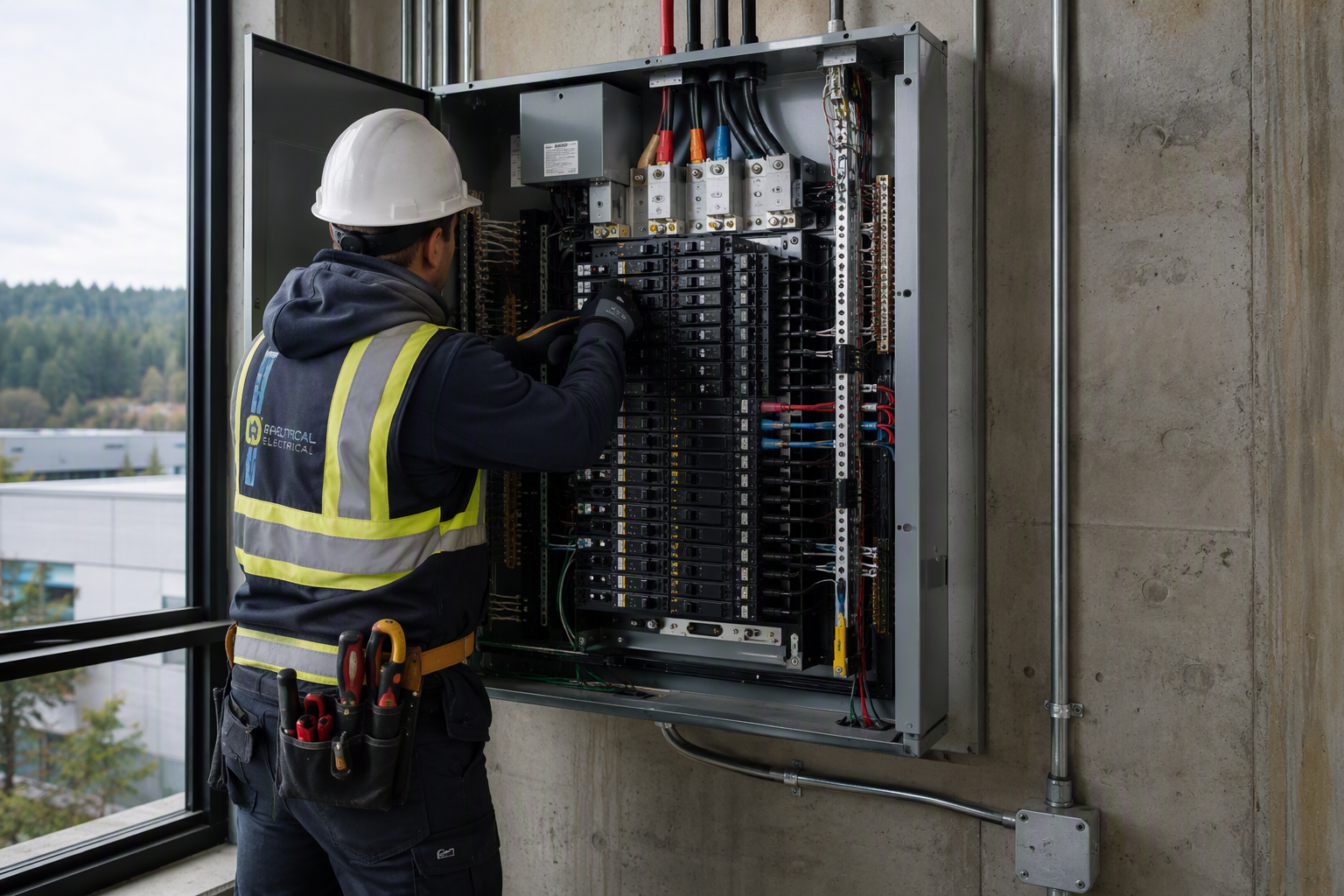
Another important consideration in commercial building wiring is the sizing and protection of electrical circuits. The NEC specifies the maximum allowable current for different sizes of conductors, ensuring that they are not overloaded and can safely carry the intended load. It also mandates using protective measures like circuit breakers and fuses to prevent excessive current flow and minimize the risk of electrical fires. Designed to trip or blow when the current exceeds a certain threshold, these devices effectively disconnect the circuit, preventing further damage.
Grounding and Bonding
Grounding and bonding are crucial aspects of commercial building wiring, as they help to protect people and equipment from electrical faults. The NEC requires that all electrical systems be grounded, providing a path for fault currents to dissipate safely. It also mandates bonding metal parts, such as conduits and enclosures, to create a low-impedance path for fault currents. Proper grounding and bonding enhance safety and reduce the risk of electrical shocks, equipment damage, and electromagnetic interference.
The Role of NEC and Local Building Codes Play
In addition to the NEC, local building codes and regulations play a role in determining the standards for wiring commercial buildings. Established by state and municipal authorities, these codes ensure that buildings are maintained safely. They may include additional requirements or modifications to the NEC based on local conditions, climate, and specific industry needs. Compliance with local building codes is vital for obtaining permits, passing inspections, and avoiding penalties or legal liabilities.
Using Qualified Professionals
It is crucial to engage qualified professionals who are knowledgeable about the applicable standards and regulations to ensure the appropriate installation and maintenance of electrical systems in commercial buildings; licensed electricians, electrical engineers, and building inspectors have the expertise and experience to design, install, and inspect commercial building wiring in compliance with the NEC and local codes. They can also provide valuable guidance on energy efficiency, system upgrades, and electrical safety practices.
Conclusion
The United States of America regulates the wiring standards for commercial buildings by the National Electrical Code (NEC) and local building codes. These standards guide selecting and installing electrical conductors, sizing and protecting electrical circuits, grounding and bonding, and overall electrical system design. Compliance with these standards is crucial to ensure commercial building electrical systems' safety, reliability, and efficiency. By engaging qualified professionals and adhering to the applicable standards, businesses can ensure the smooth operation of their facilities and protect the well-being of their employees and customers. System Solutions of Washington has the expertise to install commercial and industrial electrical systems in the great Puget Sound. Contact them today to find out how to get started with them.